Boston Terrier Head Embroidery Review
As a designer who spends half her life staring at stitch patterns and the other half trying to sell what she creates, I have learned that not every cute design translates well into a physical product. There is a distinct gap between how an embroidery file looks on a screen and how it behaves under the needle of a machine. Today, I am evaluating the Boston Terrier Head embroidery design to see if it holds up in real-world application. This review is for those of you looking to integrate this piece into your craft business, Etsy listings, or personal handmade projects.
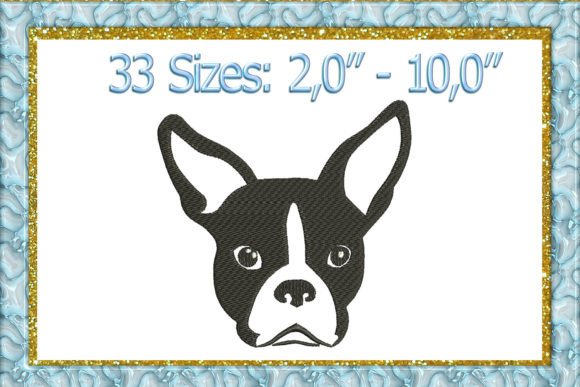
The Boston Terrier is a breed known for its tuxedo-like markings, expressive eyes, and compact, muscular build. When translated into a machine embroidery design, capturing that specific personality without losing clarity is a challenge. My initial impression of the Boston Terrier Head is that it leans heavily into charm and whimsy. It feels less like a rigid portrait and more like a stylized emblem, which actually works in its favor for many types of merchandise. The visual personality here is approachable, friendly, and instantly recognizable to dog lovers, making it a strong candidate for branding and gift items.
First Impressions and Visual Appeal
When I first loaded the Boston Terrier Head design into my hoop, the layout felt balanced. The head is centered, allowing for flexibility in placement whether you are working with a small hoop size or a larger canvas. The shape relies on clean lines and distinct contrast, which is crucial for maintaining the breed’s signature black-and-white look. In terms of mood, this design evokes a sense of playful sophistication. It is not overly childish, nor is it too serious, striking a balance that appeals to a wide demographic.
The detail level is smartly managed. For a machine embroidery project, over-detailing can lead to muddy results, especially when stitched quickly or on less-than-perfect fabric. This design avoids that pitfall by focusing on key features: the ears, the snout, and the eyes. The use of satin stitch for outlines and fill stitch for the darker patches gives the final product a textured, premium feel. It suggests quality before the customer even touches the item, which is vital for building trust in a handmade product or boutique branding.
Real-World Application Scenarios
To truly judge the utility of this machine embroidery design, we need to look at where it fits best. I have been testing concepts for various custom apparel and home decor items, and the Boston Terrier Head shows promise in several key areas.
- Tote Bags and Canvas Totes: This is perhaps the strongest use case. A tote bag provides a flat, stable surface that allows the design to shine. The whimsical nature of the dog adds a touch of personality to everyday carry items, making it an excellent choice for an Etsy seller looking to create unique accessories.
- Sweatshirt Embroidery: Placing the Boston Terrier Head on the chest of a crewneck sweatshirt creates a cozy, personalized gift vibe. The contrast of the embroidery against the soft fleece texture enhances the visual appeal. It works particularly well as a holiday embroidery project or a birthday present for dog enthusiasts.
- Baby Embroidery Items: Given its charming aesthetic, this design is suitable for baby clothes, blankets, or nursery decor. However, care must be taken regarding scale. On a onesie or burp cloth, the design needs to be resized appropriately to ensure it remains legible and does not overwhelm the garment.
- Embroidered Patches: If the design includes a clean border or can be easily edged, it serves well as an embroidered patch. These are popular for denim jackets, backpacks, and caps, offering a versatile way to incorporate the design into custom apparel.
- Kitchen Towels and Aprons: For the crafter who loves to cook, stitching this onto a tea towel or apron adds a personal touch. The durability of the stitches ensures that the design withstands frequent washing, a critical factor for kitchen textiles.
Technical Considerations and Potential Pitfalls
While the design has strengths, no embroidery file is perfect for every situation. As a professional reviewer, I must highlight where the Boston Terrier Head requires careful handling.
Fabric Texture and Stability: This design performs best on woven fabrics like cotton, linen, or canvas. Avoid using it on highly textured fabrics such as heavy terry cloth or loose-weave knits unless you are using a substantial stabilizer. The stitch density needs a stable base to prevent puckering. Similarly, thin or stretchy fabrics can distort the shape of the head if not properly stabilized, leading to a warped appearance that detracts from the professionalism of the finished product.
Dark Fabrics and Thread Contrast: The Boston Terrier’s charm lies in its high-contrast markings. Stitching this design on dark fabric requires careful selection of thread colors. White or light gray threads may get lost in the background, while dark threads might obscure the details of the face. Always test thread color contrast on scrap fabric before committing to the final product. Using a proper stabilizer behind dark fabrics can also help prevent show-through, ensuring the back of the garment looks as good as the front.
Small Hoop Sizes and Curved Surfaces: If you plan to stitch this on curved surfaces like caps or hats, be mindful of the hoop size limitation. Smaller hoops restrict the maximum dimensions of the design, which might force you to reduce the scale significantly. At very small sizes, fine details can become indistinct. Additionally, dense stitch areas in the eyes or nose may cause stiffness, which could be uncomfortable on wearable items like caps.
Washability and Durability: For products that will undergo frequent washing, such as towels or baby clothes, the longevity of the stitches is paramount. Ensure that the embroidery file uses secure tie-offs and that the stitch direction minimizes friction. Decorative accents should be robust enough to survive the wash cycle without fraying or pulling.
Designer’s Checklist for Success
Before adding the Boston Terrier Head to your commercial inventory or starting a personal project, follow these practical steps to ensure a high-quality result:
- Test on Scrap Fabric: Never skip this step. Stitch the design on the exact fabric you plan to use to check for tension issues, puckering, or color bleeding.
- Review Stitch Density: Inspect the design in your software to ensure the density is appropriate for the fabric weight. Too much density on light fabric will cause distortion.
- Check Black and White Mockups: View the design in grayscale to verify that the contrast between the black and white areas of the terrier remains distinct after stitching.
- Confirm Licensing: If you intend to sell finished items or digital products, confirm the licensing terms. Some designs are for personal use only, while others allow commercial sales. This is crucial for small shop products and craft business owners.
- Use Proper Stabilizer: Match the stabilizer to the fabric type. Cut-away stabilizers are generally better for stretchy or delicate fabrics, while tear-away works well for wovens.
- Inspect Small Details: Zoom in on the eyes and nose. These areas define the character. If they appear muddy or unclear in the preview, consider adjusting the design or choosing a different placement.
Final Verdict
The Boston Terrier Head is a versatile and charming addition to any embroiderer’s library. Its strength lies in its clear visual identity and adaptability across various mediums, from tote bag design to sweatshirt embroidery. While it requires attention to fabric choice and stabilization, the resulting finished product is likely to be well-received by customers who appreciate pet-themed art. For digital product sellers creating mockups, this design offers a realistic representation of how a beloved breed can enhance everyday items. By following the technical guidelines outlined above, you can ensure that the whimsy and charm of this design translate perfectly from screen to stitch, creating items that are both beautiful and commercially viable.